
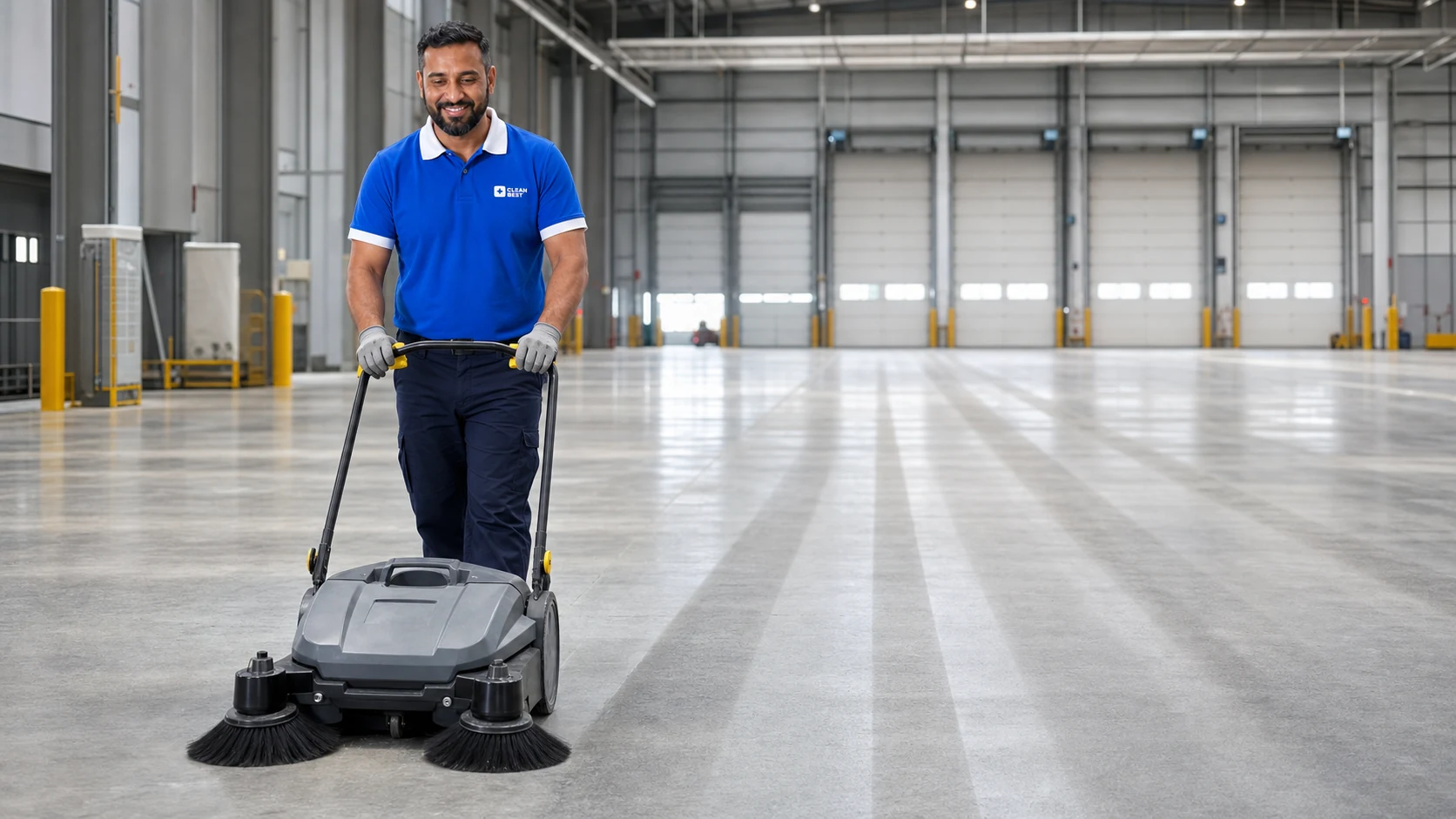
Compliance Plan · Inner South · NSW 2020
Manufacturing Facility Cleaning Compliance Plan for Mascot
A Mascot buyer considering manufacturing facility cleaning needs a service decision based on the building's use. Relevant local premises may include airport-related businesses, hotels, offices and logistics facilities. This page explains how a premises compliance plan can record applicable site rules, responsibilities and evidence. Clean Best operates from Seven Hills and confirms availability after reviewing the requested premises.
- Premises use and the parts of airport-related businesses, hotels, offices and logistics facilities that apply at this Mascot site.
- Accessible floor area, levels, amenities, kitchens, entries and work zones.
- Condition and proposed method for approved production zones.
- Required frequency and completion standard for amenities.
What sits behind the number
Every line here is a document, not an adjective. Ask for any of them and it is in your inbox the same day.
- $20m public liabilityCertificate of currency on request
- SWMS before the first shiftWith the safety data sheet for every chemical
- No lock-in contractQuote in writing within 24 hours
What should a Mascot premises compliance plan establish?
The direct answer for Mascot is a written plan that can record applicable site rules, responsibilities and evidence. It tests the real workload for approved production zones, amenities and offices, then states who approves each part. Nothing is included merely because it appears on a generic manufacturing facility cleaning checklist.
The approved answer must remain workable during normal operations. For Mascot, that means checking operational downtime, floor safety and the proposed service window. Records for access rules and task frequencies provide a baseline if a site rule, risk instruction or responsible contact changes.
- Rostered from Seven HillsCrews rostered to Silverwater from the Seven Hills depot
- Police-checked, inducted cleanersInducted on your access procedure before shift one
- $20m public liabilityCertificate of currency for your WHS file
- Quote in writing within 24 hoursFixed price, no lock-in contract
Mascot commercial cleaning guide
Compliance Plan decisions for Mascot premises
Mascot premises and operating context
manufacturing facility cleaning compliance plan Mascot — The useful location signal for Mascot is its mix of airport-related businesses, hotels, offices and logistics facilities. A premises centred on offices may place different pressure on approved production zones than one centred on logistics facilities. Clean Best therefore asks about occupancy, busy periods, deliveries and presentation priorities before settling the premises compliance plan.
Mascot is listed in Inner South, NSW 2020. Its published commercial context includes airport-related businesses, hotels, offices and logistics facilities. That information helps frame the assessment, but it is not evidence that every local building has the same rooms or operating pattern. The walkthrough confirms which features are present before manufacturing facility cleaning is specified.
Mascot premises evidence applied to the compliance decision
The service record connects task frequencies, access rules and review records with the rooms or zones they affect. This allows the client to identify an exact task and frequency when feedback is raised.
A Mascot specification should respond to airport-related businesses, hotels, offices and logistics facilities, not to an assumed standard building. For manufacturing facility cleaning, the first useful question is access, operating hours and the order in which work can occur. For manufacturing managers, production teams and industrial facilities contacts, the useful detail is who handles staff rooms, how offices is checked and when keys, alarms, loading access and restricted-room instructions changes. The client remains the source of building-specific hazard information. Clean Best uses it to plan around chemical controls, floor safety and safe movement through occupied and restricted areas. Clean Best places task frequencies, access rules and the approved service window and escalation contact in the same service conversation so responsibilities remain clear. The decision is therefore about when the team can enter, work and secure the premises, not about choosing the proposal with the broadest unsupported promise.
A buyer comparing manufacturing facility cleaning in Mascot needs decisions that can be checked, beginning with the service risks that can change method, equipment or supervision. The locality context is airport-related businesses, hotels, offices and logistics facilities. Rather than copying a universal task list, the assessment tests whether staff rooms, offices and surface, hygiene and equipment-separation requirements apply to the actual premises. The service window and task order are checked against chemical controls and floor safety; this is especially important for site-specific hazard instructions. The record for task frequencies establishes what was agreed; records for access rules then help the named contact examine the site instruction and review record. The practical outcome is an agreed answer to the controls required for commencement, with a named route for correcting the scope if operations change.
Mascot sits within Inner South, where the published locality profile includes airport-related businesses, hotels, offices and logistics facilities. That mix makes how the local premises mix affects traffic, presentation and visit frequency a practical starting point for manufacturing facility cleaning. The premises assessment records condition, access and frequency for entries and agreed waste points; it also makes which zones need every-visit attention visible to both parties. Clean Best asks how floor safety and operational downtime appear during normal operations, because that answer determines the cleaning sequence for occupied and restricted areas. The record for access rules establishes what was agreed; records for review records then help the named contact examine the first agreed room or zone schedule. The Mascot manager can then judge which tasks belong in the recurring roster using the same task and frequency record as the cleaning team.
In Inner South, Mascot has a commercial profile that includes airport-related businesses, hotels, offices and logistics facilities. That profile changes how Clean Best evaluates access, operating hours and the order in which work can occur. A useful quote explains the workload attached to approved production zones, the method proposed for floors and how keys, alarms, loading access and restricted-room instructions is handled. A site-specific method is required when production equipment or residues could undermine safe movement through occupied and restricted areas. The final instruction is recorded, not implied. Clean Best places a manufacturing zone plan, shutdown windows and the approved service window and escalation contact in the same service conversation so responsibilities remain clear. The decision is therefore about when the team can enter, work and secure the premises, not about choosing the proposal with the broadest unsupported promise.
No two Mascot premises use their space in exactly the same way, especially across airport-related businesses, hotels, offices and logistics facilities. The page focuses on how the local premises mix affects traffic, presentation and visit frequency before proposing a frequency. Rather than copying a universal task list, the assessment tests whether staff rooms, offices and which zones need every-visit attention apply to the actual premises. Clean Best asks how chemical controls and floor safety appear during normal operations, because that answer determines the cleaning sequence for occupied and restricted areas. The mobilisation record includes task frequencies, while records for access rules support the ongoing check of the first agreed room or zone schedule. This gives the Mascot contact a clear way to compare proposals and decide which tasks belong in the recurring roster before approving the service.
Mascot sits within Inner South, where the published locality profile includes airport-related businesses, hotels, offices and logistics facilities. That mix makes the difference between a measurable scope and a broad cleaning promise a practical starting point for manufacturing facility cleaning. The premises assessment records condition, access and frequency for agreed waste points and approved production zones; it also makes the boundary between routine, periodic and excluded work visible to both parties. Clean Best asks how operational downtime and production equipment appear during normal operations, because that answer determines the correct method for each surface and zone. The mobilisation record includes review records, while records for a manufacturing zone plan support the ongoing check of the task and frequency specification. The Mascot manager can then judge what is included at each visit using the same task and frequency record as the cleaning team.
Service may be arranged between production runs, during shutdown windows or in another approved low-activity period. The final timing depends on access, the client’s building rules and whether issues involving floor safety require a separate instruction or exclusion.
Applicable instructions for Mascot
A workable applicable instructions record should identify the premises rules that genuinely apply to cleaning. For Mascot manufacturing facility cleaning, the supporting details include approved production zones, offices and the authorised response to floor safety. The register excludes generic controls that have not been confirmed. This gives the buyer a specific decision to approve instead of a broad service promise.
Control ownership for Mascot
The Mascot assessor documents control ownership by making the service record assign each instruction to the client, cleaner or another authorised party. The evidence is drawn from amenities, offices and the confirmed effect of operational downtime on manufacturing facility cleaning. The ownership line prevents responsibility from being implied. Any assumption connected to offices remains subject to the premises walkthrough.
Task connection for Mascot
When planning manufacturing facility cleaning in Mascot, the authorised contact needs a task connection entry that can link a confirmed control to the affected cleaning duty. Clean Best checks approved production zones and the operating constraint of floor safety before proposing the entry. The connection turns a policy statement into an operating instruction. The accepted wording then becomes part of the site-specific premises compliance plan.
Evidence register for Mascot
The practical evidence register question for Mascot is whether the parties can state what record demonstrates that an instruction was followed. Its answer uses the assessed condition of offices, the intended treatment of amenities and any control related to operational downtime. The register supports review without inventing certification. This keeps manufacturing facility cleaning planning tied to evidence from the requested premises.
Hazard information for Mascot
Hazard information is handled as an operating instruction for the Mascot site. The instruction must record client-notified risks and the cleaner's response boundary, while explaining how floor safety affects approved production zones. The hazard entry keeps site information beside the relevant task. Clean Best asks the responsible contact to confirm the result before it is relied on for the premises compliance plan.
Exception handling for Mascot
For the assessed Mascot premises, the premises compliance plan must define the action when a control cannot be completed as written. In manufacturing facility cleaning, this requires checking approved production zones and amenities against the operating effect of operational downtime. The exception route protects security and escalation authority. Clean Best confirms the details on site because offices and logistics facilities do not establish the condition of an individual building.
Control review for Mascot
The control review decision for Mascot is to set a review point for changed rules, contacts or premises use. Clean Best tests that decision against approved production zones, offices and any instruction involving floor safety. The review keeps the compliance record current and site specific. The result belongs in the approved premises compliance plan, where the responsible contact can review it when premises use changes.
Mascot compliance decision matrix
- Mascot exception handling check 1: connect amenities with airport-related businesses; record floor safety in the compliance instruction and support the manufacturing facility cleaning decision with shutdown windows.
- Mascot control review check 2: connect offices with hotels; record residues in the compliance instruction and support the manufacturing facility cleaning decision with shutdown windows.
- Mascot applicable instructions check 3: connect agreed waste points with offices; record floor safety in the compliance instruction and support the manufacturing facility cleaning decision with shutdown windows.
- Mascot control ownership check 4: connect floors with logistics facilities; record residues in the compliance instruction and support the manufacturing facility cleaning decision with shutdown windows.
- Mascot task connection check 5: connect staff rooms with airport-related businesses; record floor safety in the compliance instruction and support the manufacturing facility cleaning decision with shutdown windows.
- Mascot evidence register check 6: connect entries with hotels; record residues in the compliance instruction and support the manufacturing facility cleaning decision with shutdown windows.
- Mascot hazard information check 7: connect approved production zones with offices; record floor safety in the compliance instruction and support the manufacturing facility cleaning decision with shutdown windows.
- Mascot exception handling check 8: connect amenities with logistics facilities; record residues in the compliance instruction and support the manufacturing facility cleaning decision with shutdown windows.
- Mascot control review check 9: connect offices with airport-related businesses; record floor safety in the compliance instruction and support the manufacturing facility cleaning decision with shutdown windows.
- Mascot applicable instructions check 10: connect agreed waste points with hotels; record residues in the compliance instruction and support the manufacturing facility cleaning decision with shutdown windows.
- Mascot control ownership check 11: connect floors with offices; record floor safety in the compliance instruction and support the manufacturing facility cleaning decision with shutdown windows.
- Mascot task connection check 12: connect staff rooms with logistics facilities; record residues in the compliance instruction and support the manufacturing facility cleaning decision with shutdown windows.
- Mascot evidence register check 13: connect entries with airport-related businesses; record floor safety in the compliance instruction and support the manufacturing facility cleaning decision with shutdown windows.
- Mascot hazard information check 14: connect approved production zones with hotels; record residues in the compliance instruction and support the manufacturing facility cleaning decision with shutdown windows.
- Mascot exception handling check 15: connect amenities with offices; record floor safety in the compliance instruction and support the manufacturing facility cleaning decision with shutdown windows.
- Mascot control review check 16: connect offices with logistics facilities; record residues in the compliance instruction and support the manufacturing facility cleaning decision with shutdown windows.
Review the relevant guidance from SafeWork NSW workplace guidance alongside the instructions and risk information for the actual premises.
What's included
Mascot site-assessment record
Confirm these details before manufacturing facility cleaning becomes a live service commitment for the assessed premises.
- Premises use and the parts of airport-related businesses, hotels, offices and logistics facilities that apply at this Mascot site.
- Accessible floor area, levels, amenities, kitchens, entries and work zones.
- Condition and proposed method for approved production zones.
- Required frequency and completion standard for amenities.
- Access window, keys, alarms, loading arrangements and restricted rooms.
- Controls for operational downtime, floor safety and client-notified hazards.
- Responsibility for access rules and task frequencies.
- Recurring inclusions, periodic work, exclusions and the authorised change contact.
The final inclusions, frequencies and service window are confirmed after the premises has been assessed.
Compliance Plan · operating fit
Manufacturing Facility Cleaning sequenced around Mascot operations
Assign each instruction to the client, cleaner or another authorised party for the Mascot premises before the roster is finalised. The ownership line prevents responsibility from being implied. The approved operating instruction also records how operational downtime affects approved production zones.
Record client-notified risks and the cleaner's response boundary as part of the Mascot handover. The hazard entry keeps site information beside the relevant task. Clean Best confirms the service window and contact path for manufacturing facility cleaning.
- Condition and proposed method for approved production zones.
- Required frequency and completion standard for amenities.
- Access window, keys, alarms, loading arrangements and restricted rooms.
- Controls for operational downtime, floor safety and client-notified hazards.
How it works
From Mascot enquiry to an approved service
A four-step path for turning the assessed manufacturing facility cleaning workload into a controlled service record.
- 1
Applicable instructions
Identify the premises rules that genuinely apply to cleaning for Mascot. The register excludes generic controls that have not been confirmed.
- 2
Control ownership
Assign each instruction to the client, cleaner or another authorised party for Mascot. The ownership line prevents responsibility from being implied.
- 3
Task connection
Link a confirmed control to the affected cleaning duty for Mascot. The connection turns a policy statement into an operating instruction.
- 4
Evidence register
State what record demonstrates that an instruction was followed for Mascot. The register supports review without inventing certification.
Compliance Plan · quality evidence
Mascot evidence and quality review
Set a review point for changed rules, contacts or premises use after the service baseline is approved. The review keeps the compliance record current and site specific. A review may use task frequencies and the authorised contact's recorded decision.
Link a confirmed control to the affected cleaning duty when reviewing the Mascot premises compliance plan. The connection turns a policy statement into an operating instruction. Evidence involving access rules is used only where it forms part of the final agreement.
- Access window, keys, alarms, loading arrangements and restricted rooms.
- Controls for operational downtime, floor safety and client-notified hazards.
- Responsibility for access rules and task frequencies.
- Recurring inclusions, periodic work, exclusions and the authorised change contact.
FAQ
Mascot manufacturing facility cleaning questions
Seven practical answers about scope, access, timing, evidence and quoting for Mascot premises.
How does applicable instructions affect manufacturing facility cleaning compliance plan Mascot?
It should identify the premises rules that genuinely apply to cleaning at the requested Mascot site. The register excludes generic controls that have not been confirmed. The assessment connects offices with chemical controls, then places the accepted answer in the premises compliance plan.
How does control ownership affect manufacturing facility cleaning compliance plan Mascot?
For Mascot manufacturing facility cleaning, the purpose is to assign each instruction to the client, cleaner or another authorised party. The ownership line prevents responsibility from being implied. Clean Best verifies the position for agreed waste points and records how restricted zones affects the decision.
How does task connection affect manufacturing facility cleaning compliance plan Mascot?
The responsible contact and Clean Best use the premises review to link a confirmed control to the affected cleaning duty. The check includes floors and residues. The connection turns a policy statement into an operating instruction, subject to approval in the Mascot premises compliance plan.
How does evidence register affect manufacturing facility cleaning compliance plan Mascot?
Evidence register is resolved by asking the Mascot assessment to state what record demonstrates that an instruction was followed. The relevant operating details include staff rooms and production equipment. The register supports review without inventing certification, so the answer can be reviewed after commencement.
How does hazard information affect manufacturing facility cleaning compliance plan Mascot?
The written answer must record client-notified risks and the cleaner's response boundary, using evidence from the actual Mascot premises. Clean Best examines entries together with operational downtime. The hazard entry keeps site information beside the relevant task within the approved premises compliance plan.
How does exception handling affect manufacturing facility cleaning compliance plan Mascot?
A useful exception handling entry will define the action when a control cannot be completed as written. At the Mascot walkthrough, approved production zones and floor safety are checked for relevance. The exception route protects security and escalation authority, rather than relying on a standard suburb package.
How does control review affect manufacturing facility cleaning compliance plan Mascot?
Clean Best proposes to set a review point for changed rules, contacts or premises use after inspecting the requested Mascot site. The decision reflects amenities, chemical controls and the authorised service boundary. The review keeps the compliance record current and site specific in the final premises compliance plan.
Keep exploring
Related manufacturing facility cleaning guidance
Continue with the parent service, nearby service-area guidance or the Clean Best quote page.
Request a Mascot manufacturing facility cleaning assessment
Describe the premises, operating hours and main concern. Clean Best will confirm availability, arrange an assessment and prepare the appropriate written premises compliance plan.